From our pasture to your plate.
At Sunny Pastures, we believe beef should be raised the old fashioned way — on grass, in the sunshine, and with careful stewardship.
Our cattle spend their days on pasture, eating grass and non-GMO feed, not the mystery rations often used in industrial feedlots. They’re raised slowly and naturally, the way cattle have been for generations. The result is beef that is flavorful, nourishing, and something we’re proud to feed our own family.
Today, most grocery store beef comes from massive feedlots where cattle are packed tightly together and pushed to grow quickly on grain-based diets. The animals may travel hundreds or even thousands of miles before ever reaching your plate, and most people have no idea where their beef actually came from.
We think there’s a better way.
At Sunny Pastures, you know exactly where your beef comes from — a small family farm where the cattle are raised on open pasture, cared for daily, and processed with quality and integrity in mind.
We believe good food should come from farmers you know and trust.
That’s why we raise our cattle carefully, feed them well, and take pride in producing grass-fed, non-GMO beef that tastes the way beef used to taste.
Because just like our milk…
store-bought beef just ain’t the same.
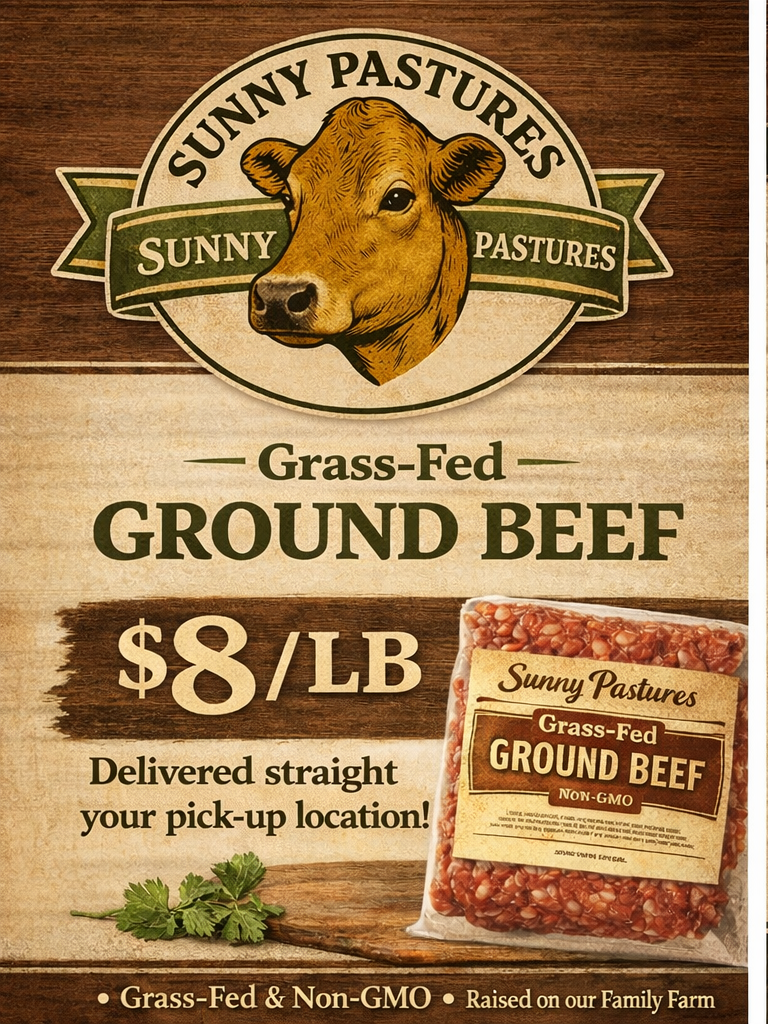
To order ground beef , please fill out the form below.
FAQs
Why Jersey beef?
1
Jersey cattle produce smaller animals but incredibly flavorful beef thanks to their rich fat and pasture diet.
Many people say Jersey beef tastes like beef used to taste.
How much freezer space do I need?
2
Approximate freezer space:
Quarter beef → 2 cubic feet
Half beef → 4 cubic feet
Whole beef → 8 cubic feet
Where is the beef processed?
3
Either at Showalters Country Meats in Liberty, Kentucky or Marksbury Meats in Lancaster, Kentucky
What is hanging weight?
4
Hanging weight is the weight of the animal after harvest but before final cutting and packaging.
Once the beef is cut and packaged, you typically receive about 60–65% of the hanging weight as take-home meat.